
A complete guide to origins, character, and why the best Indonesian coffee beans continue to win international attention
Best Indonesian Coffee Beans and Why They Matter Today
The best Indonesian coffee beans keep standing out because of a mix of climate, soil, culture, and centuries of farming knowledge. This article breaks down why these beans stay ahead, how they form their signature flavor, and what makes Indonesia such a powerful origin in the coffee world. Each chapter builds on the last for a complete understanding.
The Geological Origin Behind the Best Indonesian Coffee Beans
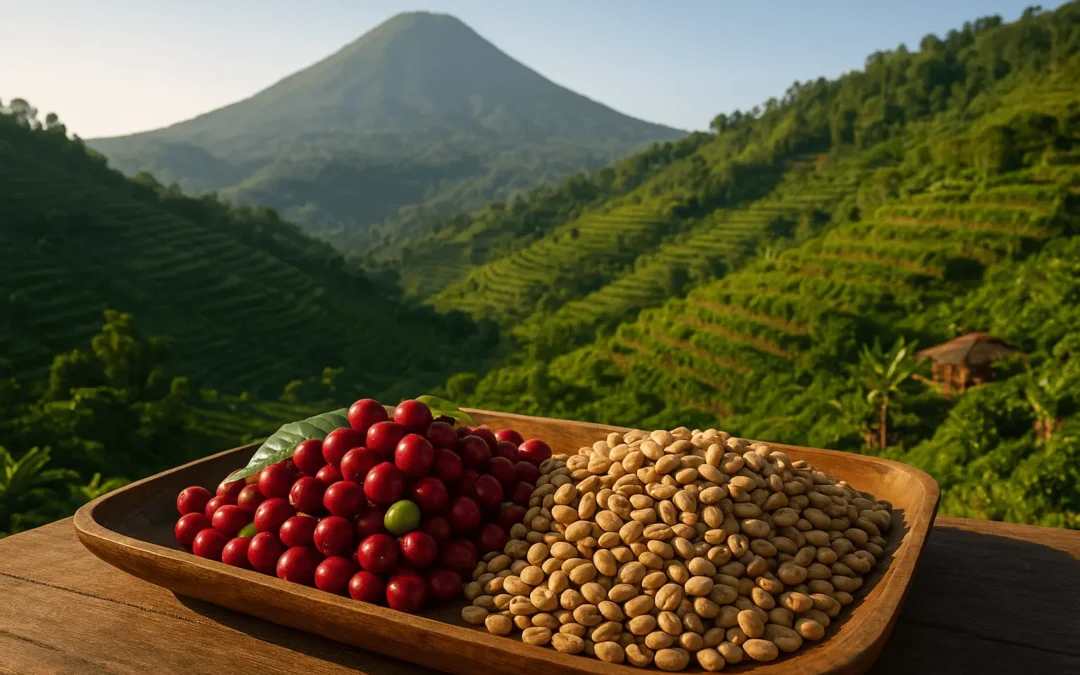
The best Indonesian coffee beans owe much of their depth to a rare blend of volcanic landscapes and tropical weather. Indonesia sits on the Pacific Ring of Fire, which shapes mountains rich in minerals and creates microclimates ideal for high-quality Arabica. The foundation starts with the island terrain itself, supported by layers of fertile material formed by ancient volcanic activity.
One of the strongest influences is the region’s soil composition. Volcanic soil gives coffee plants access to nutrients that drive sweetness, low acidity, and strong aromatic oils. When farmers plant Arabica at higher altitudes across islands like Sumatra, Sulawesi, Java, and Bali, the plants experience cooler air and slower cherry development. This slower pace allows sugars to strengthen, a hallmark flavor trait in the best Indonesian coffee beans.
Climate also matters. Indonesia’s environment is shaped by predictable tropical climate patterns that create steady rainfall and humidity, which coffee trees depend on to remain productive through long seasons. These conditions help beans mature consistently. Combined with dramatic altitude shifts, the weather forms pockets of perfect growing areas known as microclimates.
Then there is the island topography itself. Indonesia’s diverse altitudes, slopes, and coastlines tie back to its unique island geography. Each island leads to different levels of sunlight exposure, forest cover, and temperature shifts, giving the best Indonesian coffee beans a variety of flavor signatures. What ties them together is their fullness and earthy roundness.
All these geological factors form the backbone of flavor before a bean is ever processed. The best Indonesian coffee beans inherit their richness from these natural forces, and without this foundation, their signature profiles would not exist. The terrain shapes the structure, and the structure shapes the taste, creating beans recognized worldwide.
Traditional Farming Practices That Elevate the Best Indonesian Coffee Beans
The best Indonesian coffee beans come from traditions that go back more than three centuries. When coffee first entered Indonesia during the Dutch colonial era, local farmers adapted quickly and blended international methods with indigenous agricultural knowledge. Over time, this combination shaped a unique farming style that remains a core part of modern production.
Indonesia’s agricultural system has long ties to the early spread of coffee, as recorded in the history of coffee. Farmers learned to work with uneven terrain, rain-heavy weather, and dense forests. Because island communities were often isolated, each region developed its own way of maintaining smallholder farms. This is why Indonesia is known for producing diverse regional flavors even within the same species of Arabica.
Today, Indonesia still relies heavily on small family-run farms rather than large plantations. This scale encourages careful handpicking, selective harvesting, and personal oversight. Families learn pruning cycles, shade management, and soil care from previous generations. Many communities now follow practices aligned with sustainable farming principles to protect the environment while maintaining bean quality.
Processing at the farm level also affects flavor. The best Indonesian coffee beans often run through manual steps, such as homemade pulpers and sun-drying patios. This creates small variations that strengthen regional identity. Compared with more industrial origins, Indonesian farming allows natural differences to shine through instead of aiming for uniformity.
Indonesian farmers also understand timing. They know when cherries reach the right sugar balance, how to manage shade trees, and how to handle unpredictable climate conditions. In many regions, coffee grows under forest canopy, giving the cherries protection from direct sunlight. This slow, steady growth adds depth to the flavor.
These traditional farming practices ensure that the best Indonesian coffee beans maintain their heritage and flavor complexity. Without them, Indonesian coffee would lose the identity that makes it stand out in the global market.
How Processing Shapes the Best Indonesian Coffee Beans
The processing method changes flavor as much as the growing environment does. The best Indonesian coffee beans often go through techniques that are rare outside Southeast Asia. The most famous is wet-hulling, locally known as giling basah. It creates the deep, syrupy, and earthy style that has made beans from Sumatra and Sulawesi recognized around the world.
Before diving into wet-hulling, it helps to understand how coffee changes after harvest. Once picked, cherries go through a processing method that removes fruit layers and dries the beans. This step determines acidity, body, and aroma. Indonesia’s wet-hulling stands apart because the beans are hulled while they are still soft and high in moisture, creating a unique texture.
Fermentation is another important step. The best Indonesian coffee beans often ferment in small family tanks or even woven baskets. This traditional fermentation process leads to earthy depth and low brightness. Unlike washed coffees that produce crisp acidity, Indonesian coffee leans toward chocolate, spice, and herbal tones.
Drying also works differently in Indonesia due to heavy rainfall. Farmers sun-dry beans during short dry windows, turning them frequently to avoid mold. This process is slower and less predictable than in dry climates, which contributes to the heavy body found in the best Indonesian coffee beans.
Other regions like Bali and Java sometimes use natural or honey processing, which increases sweetness and highlights fruit notes. These methods rely on controlling sugar exposure and airflow, both of which affect aroma development.
Together, these processing choices build the sensory identity known worldwide. The flavor of Indonesian coffee is shaped not only by land but by the hands that prepare it after harvest.
Regional Profiles of the Best Indonesian Coffee Beans
Indonesia’s coffee identity is defined by its regions. Each major producing island carries its own climate, altitude, and processing culture. Together, they form a spectrum of flavors that strengthen Indonesia’s reputation for diversity.
Sumatra is the most famous. Beans from Aceh Gayo and Mandheling are prized for heavy body, deep earthiness, and notes of cocoa and herbs. Their character is shaped by wet-hulling and highland farms surrounded by rainforest. These traits help solidify Sumatra’s reputation for some of the best Indonesian coffee beans available.
Sulawesi produces a very different profile. The high mountains of Toraja create beans with spice, sweetness, and a round body. Farms sit at high elevations, and communities preserve traditional processing methods that balance fruitiness and earthiness.
Java offers a smoother cup, with balanced acidity and a clean finish. As one of the earliest commercial coffee regions in the world, Java has a long agricultural history and remains known for classic Arabica character shaped by its volcanic highlands.
Bali delivers sweetness and floral notes. Many farms there follow organic practices and rely on shade trees. Because the climate on the island is warm but stable, cherries ripen evenly and give a pleasant clarity.
Each region adds another layer of diversity to the best Indonesian coffee beans. They highlight how geography, community, and microclimate shape flavor in unique ways.
Why the Best Indonesian Coffee Beans Stand Out Globally
Global coffee buyers keep returning to Indonesian beans because of their reliability and distinctiveness. In a market filled with bright, fruit-forward coffees, Indonesia offers a contrasting style that is grounding and memorable.
Importers also value consistency across seasons. Because Indonesia’s weather follows stable tropical rhythms, farmers can maintain predictable harvests. This helps ensure a steady supply of the best Indonesian coffee beans for roasters worldwide.
Flavor identity is equally important. Rare processing styles, diverse terrains, and deep cultural roots all contribute to flavors not found elsewhere. Roasters looking to expand their offerings often use Indonesian beans as anchors for espresso blends because they add richness without sharp acidity.
Indonesia’s position as a major global producer also strengthens its reputation, keeping its beans in high demand. The combination of heritage, geography, and processing continues to bring Indonesian coffee to the forefront of specialty coffee culture.
Conclusions
The best Indonesian coffee beans stand out because they combine volcanic soil, steady tropical weather, traditional farming, and rare processing styles. Each region adds its own character, giving Indonesia a wide spectrum of flavors. Together, these elements keep Indonesian beans relevant, respected, and sought after in the global market. Understanding the journey behind them makes every cup more meaningful