
Finding the right coffee bean supplier Indonesia can make or break your coffee business. Whether you run a specialty roastery, hotel chain, café group, or export company, consistency is everything. Have you ever faced fluctuating bean quality or delayed shipments? That’s a common pain point when working with unreliable suppliers.
In this guide, we’ll explore how to choose the right supplier, understand the diversity of indonesia coffee beans, and build a sustainable partnership that supports long-term growth.
Why coffee bean supplier Indonesia Is a Strategic Advantage
Indonesia is one of the world’s largest coffee producers. According to the International Coffee Organization (ICO), Indonesia consistently ranks among the top coffee-producing countries globally. This strong production capacity makes sourcing directly from a coffee bean supplier Indonesia a smart move for professionals.
Here’s why:
- Direct access to origin farms
- Competitive pricing compared to imported beans
- Diverse flavor profiles
- Strong export infrastructure
Indonesia grows both Arabica and Robusta beans. In fact, based on data from the Food and Agriculture Organization (FAO), Indonesia is a major Robusta producer globally. This diversity allows businesses to tailor their product offerings—from specialty single origin to commercial blends.
If you are scaling operations, securing a reliable supply chain from the origin ensures better margin control and consistent product quality.
Popular indonesia coffee beans in the Global Market
The richness of indonesia coffee beans comes from the country’s geography. Volcanic soil, tropical climate, and highland regions create unique flavor characteristics.
Gayo Aceh
- Strong body
- Chocolate and herbal notes
- Often certified organic
Toraja Sulawesi
- Full-bodied
- Spicy and earthy
- Complex acidity
Kintamani Bali
- Bright citrus profile
- Clean finish
- Often processed using the wet-hulling method
Java Preanger
- One of the oldest exported coffees
- Balanced acidity
- Mild sweetness
You can learn more about the history of Indonesian coffee cultivation through authoritative sources such as Wikipedia’s Coffee in Indonesia page https://en.wikipedia.org/wiki/Coffee_production_in_Indonesia which explains its development since the Dutch colonial era.
Understanding these origins helps you position your product correctly in domestic and international markets.
How to Choose the Right coffee bean supplier Indonesia
Choosing a supplier isn’t just about price. Professionals look deeper.
1. Quality Consistency
Ask these questions:
- Do they provide cupping score results?
- Is moisture content maintained at 11–12%?
- Are defect counts documented?
Reliable suppliers follow standardized grading protocols. Specialty coffee typically requires an 80+ cupping score.
2. Traceability and Transparency
Modern buyers demand traceability. A credible supplier should provide:
- Farm or cooperative name
- Processing method
- Harvest period
- Certifications such as Organic or Fairtrade
Transparency builds trust—and trust builds long-term contracts.
3. Production Capacity
Before signing a long-term agreement, verify:
- Monthly supply capacity
- Warehouse facilities
- Export documentation readiness
A professional coffee bean supplier Indonesia should have clear SOPs for storage, packaging, and logistics.
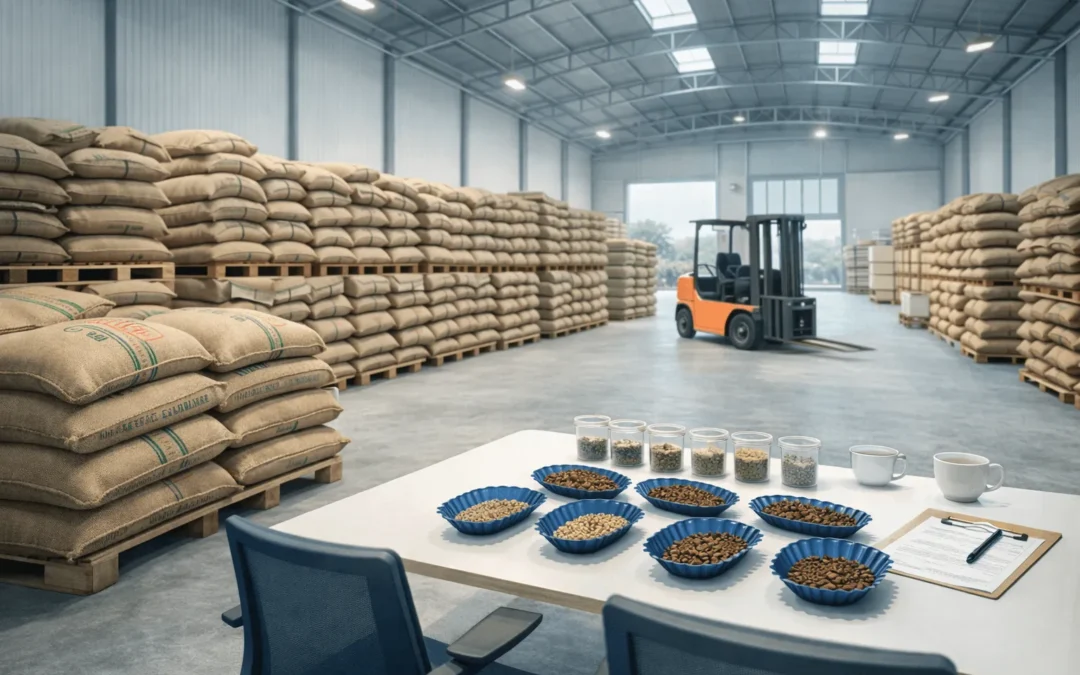
💡 Pro Tip: Visit the warehouse or request a virtual inspection. A clean, humidity-controlled facility signals professionalism.
Quality Control in Indonesian Coffee Supply Chains
Coffee is highly sensitive to environmental conditions. Poor storage can ruin flavor and aroma.
Here’s how professional suppliers manage quality:
- Manual and mechanical sorting
- Moisture testing
- Cupping by certified Q-Grader
- Packaging using GrainPro bags
- Temperature-controlled storage
According to FAO guidelines on post-harvest management, maintaining stable humidity prevents mold contamination and mycotoxin risks.
If your supplier cannot explain their quality control process clearly, that’s a red flag.
Partnership Models with coffee bean supplier Indonesia
Different businesses require different collaboration models.
Long-Term Contract
Best for:
- Large roasteries
- Private label brands
- Exporters
Provides price stability and volume security.
Spot Buying
Flexible purchasing without long-term commitment. Ideal for testing new origins.
Private Label Supply
The supplier sources and prepares beans under your branding.
Make sure contracts clearly define:
- Minimum order quantity
- Delivery schedule
- Payment terms
- Quality dispute resolution
Have you reviewed your supplier agreement recently? Small details in contracts can significantly impact your margins.
Challenges in the Indonesian Coffee Industry
Despite its strength, the industry faces challenges:
- Climate change is affecting the yield
- Price volatility in global markets
- Infrastructure limitations in rural areas
- Seasonal harvest fluctuations
That’s why choosing a supplier with diversified sourcing regions is crucial. When one region underperforms, another can compensate.
By partnering with a dependable coffee bean supplier Indonesia, you reduce operational risk and secure a consistent supply.
Internal Resources for Coffee Professionals
To deepen your understanding, you may also explore:
- Our guide on specialty coffee grading standards
- Our article about coffee export regulations
- Our overview of sustainable coffee sourcing practices
These resources help strengthen your procurement strategy.
Pertanyaan yang Sering Diajukan (FAQ)
Q: What is coffee bean supplier Indonesia?
A: A coffee bean supplier Indonesia is a company or exporter that sources, processes, and distributes Indonesian coffee beans to businesses such as roasteries, cafés, hotels, and international buyers. They manage quality control, documentation, and logistics to ensure stable supply.
Q: How do I choose a reliable Indonesian coffee supplier?
A: Evaluate their cupping scores, moisture control standards, production capacity, traceability systems, and export documentation. Visiting facilities or requesting third-party quality verification adds extra assurance.
Q: Why is coffee bean supplier Indonesia important for professionals?
A: Because supply consistency directly impacts brand reputation. A dependable supplier ensures stable quality, predictable pricing, and uninterrupted operations, which are critical for scaling businesses.
Q: How much does it cost to source indonesia coffee beans?
A: Prices vary depending on grade and origin. Commercial Robusta may start from a few dollars per kilogram, while specialty Arabica can cost significantly more depending on cupping score and certification.
Q: How long does it take to receive coffee shipments from Indonesia?
A: Domestic shipments typically take 2–7 days. International export shipments may take 2–6 weeks depending on destination country and customs clearance processes.
Q: Indonesia coffee beans vs imported beans which is better?
A: Indonesia coffee beans offer unique flavor profiles and competitive pricing. Imported beans may provide different taste characteristics. The better option depends on your target market and branding strategy.
Q: What do I need to start working with a coffee bean supplier Indonesia?
A: You need a clear purchase agreement, defined quality specifications, payment terms, and legal company documentation for invoicing and export compliance.
Q: When is the best time to purchase Indonesian coffee?
A: The best time is shortly after harvest season, when beans are freshest and supply is stable. Harvest seasons vary by region but generally occur once or twice per year.
Conclusion
Choosing the right coffee bean supplier Indonesia is a strategic investment in your business stability and brand reputation. With Indonesia’s strong production capacity and diverse flavor origins, sourcing directly from origin offers both commercial and quality advantages.
Ready to strengthen your coffee supply chain? Start by auditing your current sourcing strategy and exploring reliable supplier partnerships today.
Sources:
- International Coffee Organization https://www.ico.org
- FAO Coffee Post-Harvest Guidelines https://www.fao.org
- Wikipedia Coffee Production in Indonesia https://en.wikipedia.org/wiki/Coffee_production_in_Indonesia