
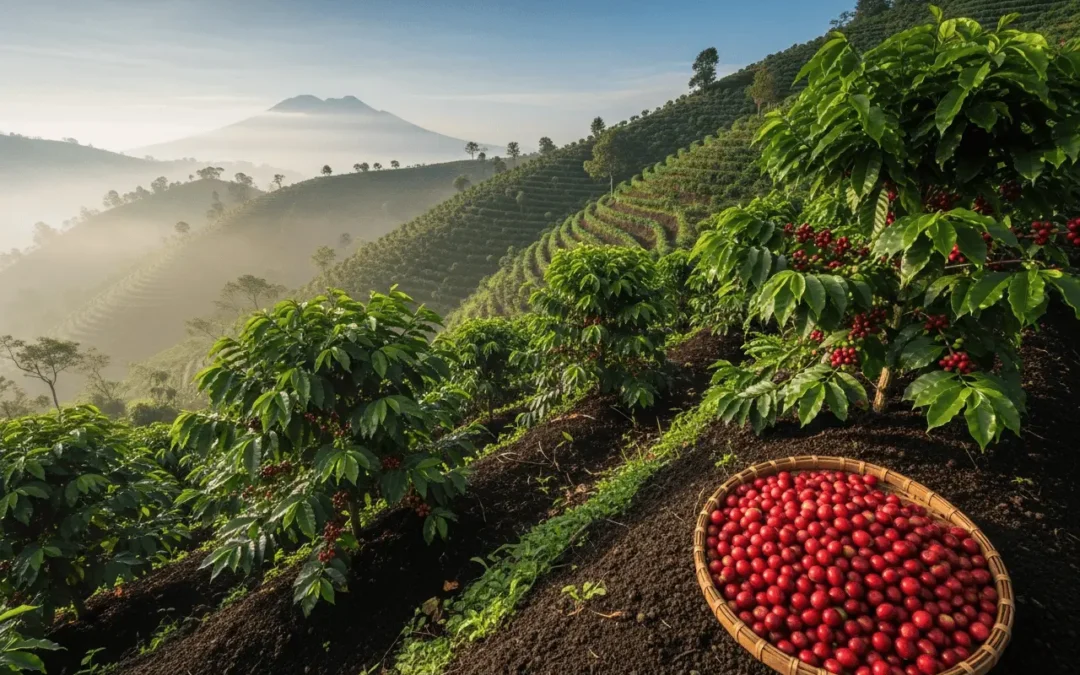
A complete look at the origin, culture, flavor, sustainability, and brewing methods that make Gayo coffee a standout among world specialty beans.
Gayo Coffee Uncovered
Gayo coffee grows in the volcanic highlands of Aceh and carries a flavor profile that sets it apart from other Indonesian Arabicas. This introduction gives you the essentials before diving deeper into its heritage, taste, sustainability practices, and brewing methods. Every part connects, so you understand what gives Gayo coffee its lasting value.
Where Gayo Coffee Comes From
Gayo coffee begins its journey in the Gayo Highlands of Central Aceh. These elevated fields sit between 1,200 and 1,700 meters. High altitude gives Gayo coffee its clean sweetness and rich aroma. The soil here is volcanic and mineral-heavy, conditions described by the Food and Agriculture Organization as ideal for long-term coffee fertility.
Arabica plants arrived through Dutch influence in the twentieth century and slowly shifted into small family farms. Many of these farms still rely on their own seed selection, compost, and shaded planting. This slow and natural approach helps Gayo coffee grow with steady quality.
The region also relies on structured quality standards similar to what the Specialty Coffee Association describes as crucial for specialty classification. Everything from picking to drying affects the final result.
The Gayo Highlands cover large areas where coffee trees grow beside cinnamon, avocado, and shade plants. These mixed systems prevent erosion and protect soil nutrients. The method fits recommendations from the International Coffee Organization, both of which promote sustainable production in mountain environments.
Slow fruit ripening in these cool highlands allows Gayo coffee cherries to build sweetness and aroma. This slow pace is one of the silent reasons Gayo coffee wins loyal fans.
The Cultural Roots Behind Gayo Coffee
Gayo coffee carries centuries of tradition. Local farmers follow practices that connect their identity to their land. One of these is the Dua Ni Kopi ritual, a planting ceremony where a grower places a young seedling into the soil while offering a prayer. The goal is simple: ask for strength, growth, and a harvest that helps the entire community.
Community cooperatives play an important role. They support training, quality control, and shared resources. Many follow fair trade ideals outlined by Fairtrade International, helping farmers earn stable incomes through transparent sourcing.
Cultural life is filled with Gayo coffee. Guests receive warm cups, families roast beans by hand, and many homes keep bags of green coffee ready for special moments. These traditions keep Gayo coffee deeply rooted in daily life.
Sustainability and cultural identity meet through partnerships with NGOs. The World Resources Institute supports local efforts to protect forests and improve farm resilience. This connection strengthens both culture and land and ensures that Gayo coffee continues to grow in a stable environment.
The combination of ritual, community, and shared agricultural responsibility makes Gayo coffee more than a product. It is a cultural symbol of endurance and identity.
Flavor Profile and What Makes Gayo Coffee Special
Gayo coffee is known for gentle acidity, full body, and smooth sweetness. Professional cupping groups such as the National Coffee Association describe balanced acidity and rounded flavor as hallmarks of premium Arabica.
Gayo coffee flavors often include caramel, cocoa, nuts, and soft herbs. Some batches offer citrus brightness. Others lean toward floral or fruit notes depending on altitude and processing. Natural processing brings fruit sweetness. Washed processing gives clarity and a clean finish. Honey processing blends both.
This balance is why many roasters select Gayo coffee for medium or medium-dark roasting. These roast levels keep the bean’s character intact while adding warm chocolate layers. Studies from the Coffee Research Institute show how roast level affects mouthfeel, aroma, and body.
Gayo coffee rarely shocks the palate. Instead, it offers comfort, depth, and gentle complexity. This makes it ideal for beginners and experts. Every cup reflects the calm climate, slow ripening, and natural farming at the heart of the Gayo Highlands.
Sustainability and Economic Strength of Gayo Coffee
Sustainability is central to the identity of Gayo coffee. Most farms rely on traditional shade systems and organic material to maintain soil strength. These practices align with the environmental guidelines of the Rainforest Alliance, which promote biodiversity protection and responsible agriculture.
Forest protection is a priority in Aceh. The World Resources Institute supports local farmers with land use planning and education. These programs help growers improve yields while preserving surrounding forests.
Economically, Gayo coffee supports thousands of households. Direct trade partnerships give farmers stable buyers and better prices. Many villages rely on Gayo coffee sales for schooling, home improvement, and long-term development.
Certifications also increase value. Farmers who follow organic practices work toward standards explained by the USDA Organic Fairtrade certification adds another layer of protection.
Gayo coffee has also earned geographic protection through international GI systems, including registries noted by the European Commission and the Indonesian GI program. These protections secure authenticity and prevent misuse of the Gayo coffee name.
With strong sustainability and economic structures, Gayo coffee maintains value for both land and community.
How to Brew and Enjoy Gayo Coffee
Brewing Gayo coffee is flexible. Its balanced flavor fits many methods. For a pour over, choose a medium grind and a water ratio of 1 to 16. This reveals the sweetness and subtle herbs. Pour in slow circles and give the coffee time to bloom.
For a stronger body, use a French press with coarse grounds. Steep for four minutes. This brings out the richness that Gayo coffee is known for.
Espresso works well with medium-dark roasts, which reveal caramel and cocoa. Gayo coffee shots often produce thick crema and a long, smooth finish.
Cold brew softens the acidity and highlights natural sweetness. Mix with milk or keep it black.
To achieve consistent results, follow water and grind recommendations similar to the guidelines provided by the International Coffee Organization
Store Gayo coffee beans away from heat and light. Grind only what you need. Freshness brings the flavor to life.
Conclusion
Gayo coffee brings together land, tradition, and steady craftsmanship. Its smooth flavor reflects the highlands where it grows, and its sustainable approach protects farms and forests for the future. Whether you brew it daily or explore it as a specialty, Gayo coffee offers depth, comfort, and a lasting connection to its culture.