
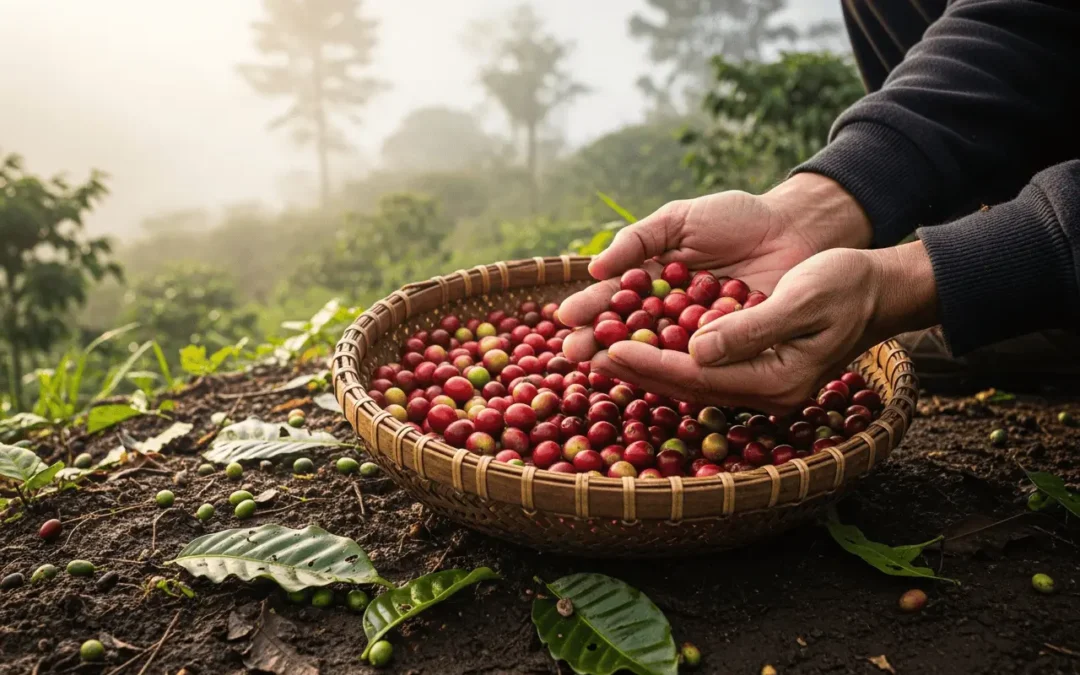
A deep look at why Mandheling coffee and Lintong coffee from Sumatra are among the most distinctive Arabica beans in the world.
Mandheling coffee and Lintong coffee are worth discovering
Mandheling coffee and Lintong coffee represent the heart of Sumatra’s coffee identity. This article explores their origins, culture, flavor, and brewing techniques to help you understand why these beans are treasured globally. You will learn where they come from, how they are processed, and what makes their taste unforgettable.
Origins and Cultural Roots Behind These Beans
The journey begins with Mandheling coffee, a name historically linked to the Mandailing ethnic group in northern Sumatra. Even though it is not tied to one single plantation, the name reflects coffee grown in regions shaped by local tradition, volcanic terrain, and generations of smallholder farmers. These communities have passed down techniques that helped define how Sumatran coffee developed.
Meanwhile, Lintong coffee comes from the Lintong Nihuta district, a cool, elevated zone southwest of Lake Toba. The area is known for fertile volcanic soil created by the ancient Toba supervolcano eruption. Its altitude, temperature, and mineral-rich terrain make it one of Indonesia’s premier Arabica zones.
The volcanic foundation of these landscapes, influenced by the Toba Caldera, gives both coffees rich mineral complexity. This natural environment uniquely shapes their flavor structures, setting them apart from coffees from Central America or Africa.
Arabica first arrived in Indonesia during colonial times, as documented in global coffee history records, but the people of northern Sumatra adapted these crops with their own methods. Over time, they developed coffee identities we now recognize as Mandheling and Lintong.
Although Mandheling is technically a broad trade name, and Lintong is a geographically specific origin, both contribute to the world’s understanding of what Sumatran coffee tastes like.
Processing Methods That Create Their Signature Identity
A major factor behind the flavor of Mandheling coffee and Lintong coffee is the traditional wet-hulling technique, or giling basah. This process, explained in coffee processing studies, involves hulling beans while still partially wet. The result is a bean that dries quickly in Sumatra’s humid climate and develops the thick, earthy profile that fans love.
Farmers harvest cherries, pulp them, allow partial drying, then hull them at a much higher moisture level than other origins. This creates a distinctive bluish-green appearance in the green beans, a visual trait recognized by roasters worldwide.
Smallholder farmers dominate the industry, as noted in agricultural reports on smallholders, and their hands-on approach, combined with traditional aeration and open-air drying, means each batch carries the touch of individual craftsmanship.
In Lintong, the wet-hulling process is performed more carefully due to the altitude and cooler air. This is why Lintong beans sometimes show greater clarity, while Mandheling beans express deeper rustic tones. Both methods reflect long-standing traditions rather than industrialized systems, making these coffees culturally significant.
The combination of terrain, manual processing, and wet-hulling forms a perfect trio that defines the sensory identity of Mandheling and Lintong.
Flavor Profiles and What You Can Expect in Your Cup
A cup of Mandheling-style coffee offers a heavy, syrupy body that coats the palate. You may notice low acidity, strong chocolate notes, hints of earth and herbs, and a deep finish that lingers. This makes Mandheling a favorite for those who enjoy rich, grounding cups rather than bright, citrusy ones.
Meanwhile, Lintong-region coffee adds refinement. Expect balance, cleaner acidity, and subtle flavors like soft herbs, sweet spices, and occasional fruity or floral highlights. It remains grounded in Sumatran depth, but with more structure.
These differences are often highlighted by professional cupping sessions as described in specialty coffee reviews, where Lintong is praised for elegance and Mandheling for boldness.
Some flavor notes you might encounter include:
• Dark chocolate
• Tobacco leaf
• Sweet herbs
• Tamarind
• Brown sugar
• Forest floor
• Hints of jasmine or spices
Both coffees share a feeling of warmth, earthiness, and nostalgia — ideal for slow mornings or late-night brewing. Their complexity makes them excellent for coffee drinkers seeking a deeper, more grounded experience.
Brewing Mandheling and Lintong for the Best Results
Because these coffees are naturally bold and dense, the best brewing methods highlight body and depth. A French Press works beautifully because immersion pulls out heavier textures. The Moka pot also enhances chocolate notes, while Aeropress immersion can soften bitterness without losing weight.
For those who want to express Lintong’s sharper clarity, a pour-over method such as V60 or Kalita reveals acidity and aroma. According to coffee extraction research, grind size and water temperature strongly influence the final flavor. A slightly coarse grind for immersion and a medium-fine grind for pour-over give the best results.
Tips for brewing Mandheling and Lintong:
• Use water between 92–96°C
• Allow 3–4 minutes of extraction for immersion
• Avoid overly fine grinding to reduce muddiness
• Try medium or medium-dark roast for the best character
• Bloom pour-overs for 30 seconds to open aroma
Milk pairs well with Mandheling due to its boldness, while Lintong performs best black for those who appreciate subtle layers.
By adjusting the method to fit the bean, you can highlight either the rustic depth of Mandheling or the elegant nuance of Lintong.
Why These Coffees Matter in Global Specialty Culture
Mandheling coffee and Lintong coffee are more than products — they represent heritage, identity, and community. Their stories involve farmers who rely on traditional knowledge, regional pride, and manual labor. The cultural significance is evident in Sumatra’s regional history, where coffee remains a key livelihood.
In the global market, these beans hold a special place. Mandheling is a staple for dark-roast lovers because of its strength. Lintong attracts specialty cafes thanks to its balance. Together, they showcase the diversity of Indonesia’s coffee landscape.
For roasters, they offer flexibility. For consumers, they offer comfort and character. For Sumatra, they carry identity and tradition.
Both beans symbolize how culture, land, and technique blend into something people around the world love.
Conclusion
Mandheling coffee and Lintong coffee offer a journey through Sumatra’s heritage, landscape, and flavor identity. With their deep body, volcanic character, and traditional processing, they bring a unique experience to every cup. Whether you enjoy bold richness or refined complexity, these coffees deliver a taste worth revisiting.