
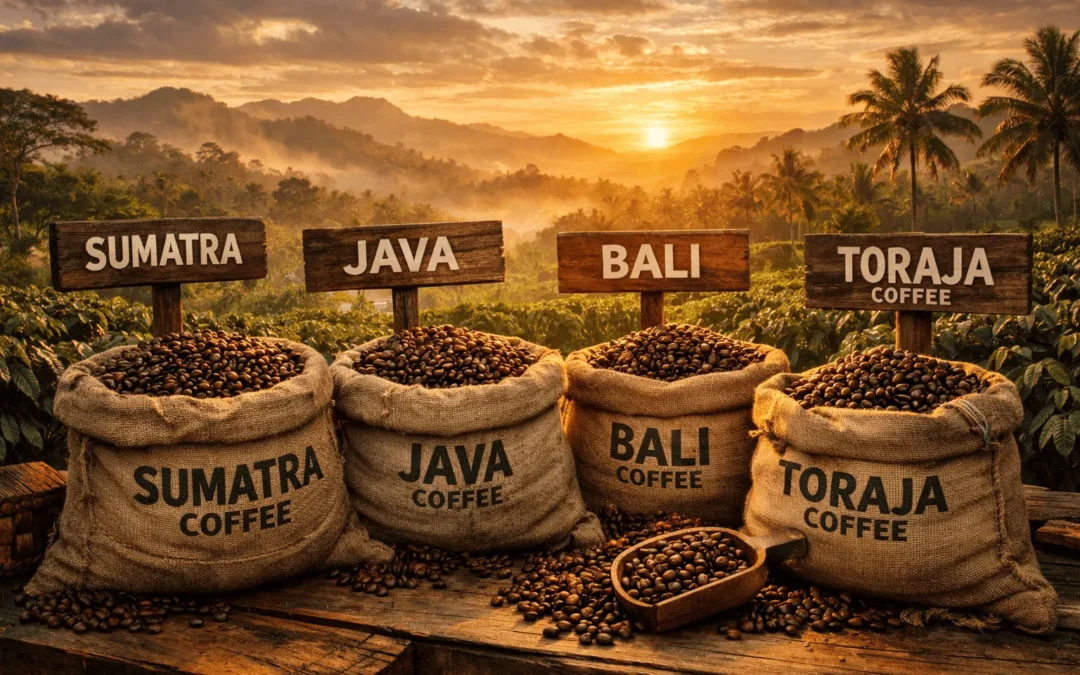
When professionals talk about the top coffee beans from Indonesia, they’re not just discussing flavor. They’re talking about heritage, terroir, altitude, and global trade impact. Indonesia is currently the world’s fourth-largest coffee producer, according to the International Coffee Organization. But what makes indonesia coffee beans stand out in a competitive global market?
In this guide, we’ll explore origin regions, processing methods, flavor profiles, and buying considerations—specifically for professionals who need more than surface-level information.
Why Top Coffee Beans from Indonesia Are Globally Respected
Indonesia’s coffee story began in the 17th century when the Dutch introduced coffee plants to Java. Over time, cultivation expanded across Sumatra, Sulawesi, Bali, and Flores.
According to Wikipedia’s overview of Coffee Production in Indonesia, most farms are smallholder-operated. This creates a strong artisanal identity in the supply chain.
Unique Growing Conditions
Indonesia’s volcanic soil and tropical climate create:
- Rich mineral composition
- High-altitude microclimates
- Distinctive regional flavor profiles
- Natural shade-growing systems
These factors contribute to bold, earthy, and complex cup characteristics.
Wet-Hulled Processing Method
One of Indonesia’s signature contributions is Giling Basah (wet-hulling).
This method:
- Removes parchment early
- Speeds drying in humid climates
- Produces heavier body
- Creates low acidity with deep earthiness
For roasters and buyers, this processing technique explains why indonesia coffee beans often feel fuller and more intense.
Sumatra and the Top Coffee Beans from Indonesia
Sumatra Mandheling
Sumatra Mandheling is often the first name mentioned among the top coffee beans from Indonesia. Grown between 900–1,500 meters, it’s known for:
- Full body
- Low acidity
- Notes of dark chocolate, tobacco, and spice
Professional buyers favor it for espresso blends because it adds depth and structure.
Sumatra Lintong
Lintong coffee offers slightly brighter acidity while maintaining earthy tones. It is cultivated near Lake Toba, one of the largest volcanic lakes in the world.
Compared to Mandheling:
- Cleaner finish
- Herbal and sweet undertones
- More clarity in the cup
If you’re building a premium dark roast program, these origins are foundational.
Sulawesi and Other Premium Indonesia Coffee Beans
Sulawesi Toraja
Grown in the highlands of South Sulawesi, Toraja beans offer balance.
Typical profile:
- Medium body
- Complex spice
- Dark fruit sweetness
- Smooth mouthfeel
Professionals appreciate Toraja for specialty retail offerings because it bridges boldness and elegance.
Bali Kintamani
Unlike Sumatra, Bali Kintamani often uses a washed process. The result?
- Bright citrus notes
- Medium body
- Floral aroma
For cafes targeting lighter roast consumers, this origin is an excellent alternative.
Flores Bajawa
From eastern Indonesia, Flores coffee grows in volcanic soils near Mount Inerie.
Flavor profile:
- Nutty sweetness
- Mild acidity
- Cocoa finish
It works well in both single-origin offerings and blends.
Arabica vs Robusta in Indonesia Coffee Beans
Indonesia produces roughly 75% Robusta and 25% Arabica. For professionals, understanding this ratio is critical.
Arabica Beans
- Higher altitude
- More complex flavor
- Specialty-grade potential
- Premium pricing
Robusta Beans
- Lower altitude
- Strong caffeine content
- Bitter and bold
- Used in instant coffee and blends
Interestingly, Indonesian Robusta is considered among the better-quality Robustas globally, often exported to Europe for espresso blends.
If you’re sourcing for commercial production, understanding the role of both types is essential.
How to Source Top Coffee Beans from Indonesia for Business
Choosing top coffee beans from Indonesia requires due diligence.
Key Evaluation Factors
- Altitude – Higher elevation often equals better quality
- Processing Method – Wet-hulled vs washed impacts flavor
- Harvest Season – Typically May to October
- Certifications – Organic, Fair Trade, Rainforest Alliance
For reliable sourcing, refer to official trade information from the Indonesian Ministry of Trade at https://www.kemendag.go.id (opens in new tab).
Cupping Best Practices
When evaluating indonesia coffee beans:
- Roast sample batches consistently
- Measure moisture content (ideal 10–12%)
- Conduct blind cupping
- Assess body, acidity, aroma, aftertaste
Professionals should also track lot traceability for quality assurance.
Market Demand and Export Trends
Indonesia exports coffee to:
- United States
- Germany
- Japan
- Italy
According to trade data from the International Coffee Organization, Indonesia contributes roughly 7–8% of global coffee exports annually.
Pricing Insight
Prices vary depending on:
- Grade
- Region
- Processing
- Certification
Specialty-grade Sumatra Mandheling can command significantly higher prices than bulk Robusta.
If you’re building a premium coffee portfolio, Indonesia offers both specialty and commercial-scale options.
Quality Control and Sustainability Considerations
Sustainability is increasingly important for professional buyers.
Environmental Factors
Many farms use:
- Shade-grown systems
- Organic fertilizers
- Manual harvesting
However, deforestation and climate change remain challenges.
Ethical Sourcing
Look for:
- Transparent supply chains
- Direct trade relationships
- Cooperative-based sourcing
Building relationships with producers strengthens long-term quality stability.
Practical Recommendations for Professionals
If you’re a roaster, distributor, or café owner, consider:
- Using Sumatra for an espresso base
- Offering Bali Kintamani for lighter roast options
- Adding Sulawesi Toraja for specialty retail
Diversifying your Indonesia coffee beans portfolio allows you to serve different customer segments effectively.
Want to improve your sourcing strategy? Consider building direct partnerships with exporters to reduce middleman costs.
FAQ
Q: What is top coffee beans from Indonesia?
A: Top coffee beans from Indonesia refer to premium-grade beans sourced from regions like Sumatra, Sulawesi, Bali, and Flores. These beans are known for bold body, earthy flavor, and unique wet-hulled processing methods that differentiate them from other global origins.
Q: How to choose high-quality indonesia coffee beans?
A: Evaluate altitude, processing method, moisture level, harvest timing, and certification. Conduct cupping tests and review supplier transparency. Higher-altitude Arabica generally offers better complexity and flavor clarity.
Q: Why are top coffee beans from Indonesia important for professionals?
A: They provide strong body and blending stability. Many espresso blends rely on Indonesian beans for structure and depth. Their consistent supply and unique processing make them valuable in commercial roasting.
Q: How much does premium Indonesian coffee cost?
A: Prices vary widely. Specialty-grade Arabica can range significantly higher than commercial Robusta. Costs depend on region, certification, and processing method.
Q: How long does it take to source Indonesia coffee beans?
A: Sourcing may take several weeks to months, depending on harvest season, export logistics, and shipping routes. Planning around harvest cycles is essential.
Q: Indonesian Arabica vs Robusta, which is better?
A: Arabica offers more complexity and is preferred for specialty markets. Robusta provides higher caffeine and stronger body, making it ideal for blends and commercial products.
Q: What is needed to import coffee beans from Indonesia?
A: Import licenses, supplier contracts, quality inspection, compliance with food safety regulations, and logistics planning are required.
Q: When is the best time to buy Indonesian coffee?
A: Shortly after harvest season (May–October) ensures freshness and better lot selection for specialty-grade beans.
Conclusion
Indonesia remains one of the most influential coffee-producing nations in the world. From Sumatra’s earthy boldness to Bali’s bright citrus notes, the diversity of top coffee beans from Indonesia offers unmatched versatility.
For professionals, understanding origin, processing, and market trends isn’t optional—it’s strategic.
Ready to refine your sourcing decisions? Start exploring verified exporters and elevate your coffee portfolio today.
Sources:
- International Coffee Organization
- Indonesian Ministry of Trade
- Wikipedia – Coffee Production in Indonesia